
The United States has issued a strong warning to the European Union, signaling the possibility of increased tariffs if a crucial trade agreement fails to gain approval.
Speaking to Bloomberg News, Andrew Puzder said the EU risks facing tougher economic measures if the deal collapses. “If the trade deal goes away, you guys get hit with the increased tariffs, and for us, nothing changes,” he stated, adding that rejecting the agreement would be “economic malpractice.”
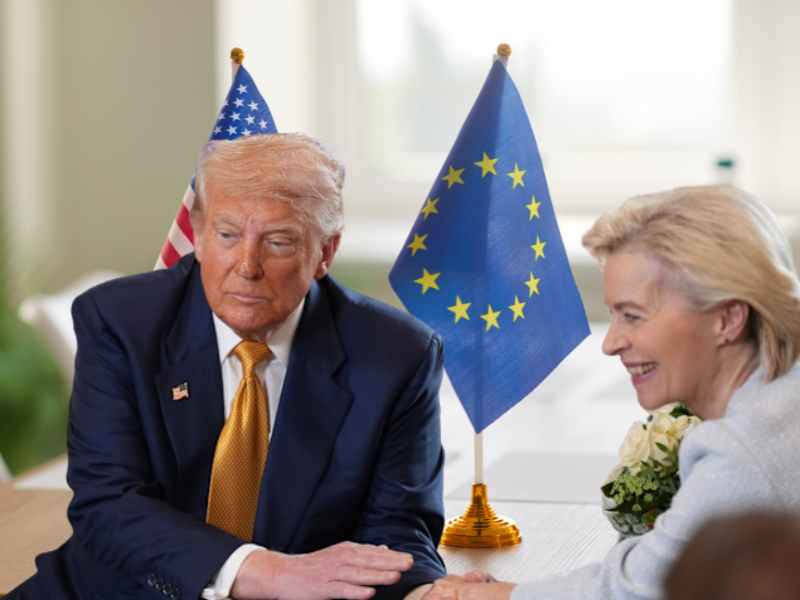
The warning comes just days before the European Parliament is set to vote on March 26 on the EU-U.S. trade pact. The agreement was initially finalized last year between U.S. President Donald Trump and European Commission President Ursula von der Leyen during talks in Turnberry, Scotland.
The proposed deal aims to cap tariffs at 15% on most European goods entering the United States, while eliminating duties on a wide range of American exports to the EU. However, the agreement has faced repeated delays amid political tensions and policy uncertainties.
One major sticking point has been concerns over U.S. trade policies, including Trump’s previous threats to annex Greenland and broader tariff strategies. The deal was further complicated after the Supreme Court of the United States struck down the administration’s global tariffs, prompting the U.S. to impose a temporary 10% levy on imports while restructuring its trade framework.
In response, EU lawmakers have amended the deal, requiring firm guarantees from Washington that the 15% tariff ceiling will be maintained before implementation. They have also introduced a sunset clause, meaning the agreement would expire in March 2028 unless both sides agree to extend it.
Additionally, European lawmakers are pushing for the U.S. to reduce its 50% tariff on metals, which currently affects hundreds of products containing steel and aluminum.
Puzder expressed optimism that the agreement will ultimately pass, saying, “I think we have enough votes.”
He also pointed to South Korea as an example of potential consequences if negotiations fail, noting that the U.S. had previously threatened the country with 25% tariffs over trade disagreements.
If approved, the deal will move into the next phase of negotiations between EU institutions and member states to finalize its terms. The outcome is expected to have significant implications for transatlantic trade relations and the global economic landscape.