
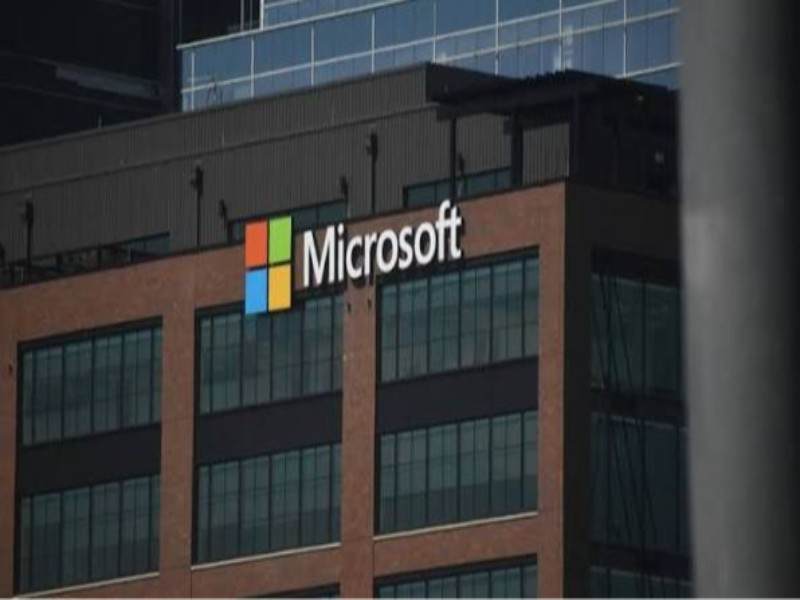
Microsoft is offering voluntary buyouts to roughly 60,000 employees, more than a quarter of its global workforce, as the technology giant looks to rein in staffing costs while directing extraordinary sums toward artificial intelligence infrastructure.
The voluntary exit program is available to eligible employees across selected teams in the United States, Canada, the United Kingdom and India, according to reporting on the company’s internal plans. The initiative comes as Microsoft rapidly expands spending on data centers, chips and other infrastructure needed to support its growing AI business.
The move does not mean Microsoft is immediately cutting 60,000 jobs. Instead, approximately that many employees are eligible to voluntarily leave the company in exchange for severance and other benefits.
Microsoft employed about 223,000 full-time workers worldwide as of June 2026, meaning the employees eligible for the latest program represent more than one-fourth of its global workforce.
Who Is Eligible for Microsoft’s Buyout?
The program, known internally as a Voluntary Exit Offer, applies mainly to eligible employees at level 70 and below within participating organizations.
Teams covered by the program include parts of:
- AI experiences
- Microsoft Copilot
- Windows and Devices
- Finance
- Human resources
- Xbox
Some parts of Microsoft’s marketing, commercial business and security organizations are excluded from the offer. Eligibility differs depending on an employee’s location and organization.
Microsoft Chief People Officer Amy Coleman told employees that the program was designed to give workers considering a departure an opportunity to leave with financial support while allowing individual organizations to adjust to evolving workforce requirements.
Eligible workers are expected to have until early December to decide whether to participate, with departures generally taking place around the end of the year.
What Microsoft’s Buyout Package Includes
The amount employees receive will vary based on factors including seniority, location and length of service.
For some U.S. employees, the package follows Microsoft’s existing severance framework. Workers at lower internal levels may receive severance calculated according to years of service, while certain higher-level employees could qualify for substantially longer salary continuation.
Some eligible employees may also receive continued health coverage and stock vesting for a limited period after leaving the company.
The voluntary nature of the program gives Microsoft an opportunity to reduce costs without relying exclusively on traditional layoffs.
Microsoft’s AI Spending Is Surging
The workforce program arrives at a crucial moment for Microsoft. The company has been spending aggressively to build the computing capacity required for artificial intelligence services, including its Azure cloud platform and Copilot products.
Microsoft has forecast approximately $175 billion in capital expenditures for 2026, with AI infrastructure representing a major part of that spending.
Microsoft is not alone.
Amazon, Microsoft and Google parent Alphabet could collectively spend as much as $600 billion this year as the technology industry’s largest companies race to build data centers and secure increasingly powerful AI computing systems.
That spending boom is creating a new question for Wall Street: how quickly can Big Tech convert its enormous AI investments into sustainable profits?
Investors Want Proof AI Spending Will Pay Off
For much of the AI boom, investors rewarded technology companies that promised aggressive investment in artificial intelligence. That attitude has begun to become more cautious.
Investors are increasingly examining cloud revenue, cash flow and profit margins to determine whether the enormous cost of AI infrastructure can produce adequate financial returns.
Microsoft will face particular scrutiny because its Azure cloud business has become one of the clearest ways for investors to measure demand for AI computing.
Analysts expect Azure growth to remain strong, but billions of dollars in infrastructure spending mean revenue growth alone may no longer satisfy investors.
The combination of workforce cost controls and heavy investment illustrates the balancing act now facing Microsoft: spend enough to remain at the forefront of AI while preventing those investments from putting too much pressure on profitability.
Microsoft Has Already Been Restructuring Its Workforce
The latest buyout program is not Microsoft’s first workforce adjustment this year.
Earlier in 2026, the company offered a voluntary retirement program to thousands of U.S. employees. It has also carried out job reductions, including cuts connected to restructuring within its Xbox gaming operations. The broader technology industry has followed a similar pattern.
Companies across software, cloud computing, finance and technology have been reducing headcount or reorganizing teams while simultaneously increasing spending on AI.
The shift suggests that AI is changing corporate budgets in two directions at once: companies are spending heavily on computing infrastructure while looking for opportunities to operate with leaner workforces.
AI Is Reshaping Big Tech’s Cost Structure
For Microsoft, artificial intelligence is no longer simply another product category.
The technology increasingly influences decisions involving cloud infrastructure, software development, staffing, data-center construction and capital allocation. That transformation carries enormous costs.
Technology companies need advanced GPUs, networking equipment, electricity, data centers and specialized engineering talent to develop and operate increasingly capable AI systems.
As investment grows, executives are under pressure to find savings elsewhere.
Voluntary buyouts can provide one way to reduce payroll expenses while avoiding some of the disruption associated with mandatory layoffs.
But the scale of Microsoft’s latest program — potentially involving eligibility for around 60,000 people — highlights just how significant the financial transformation surrounding AI has become.
For Microsoft employees, the program presents a major career decision. For investors, it offers another sign that even one of the world’s largest technology companies is carefully managing costs while committing unprecedented amounts of capital to the artificial intelligence race.