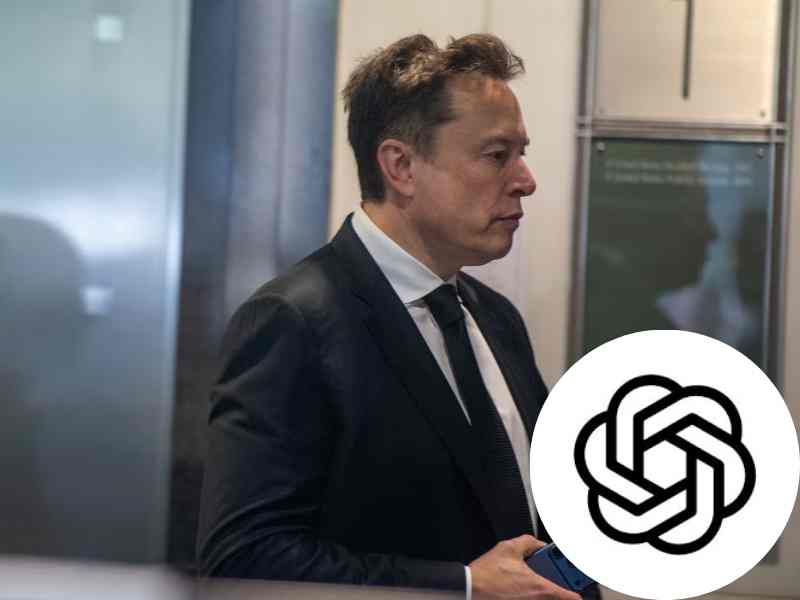
A high-stakes legal battle between tech billionaire Elon Musk and artificial intelligence company OpenAI has officially entered the courtroom, with potential consequences that could reshape the future of the global AI industry.
The trial, which began this week, centers on Musk’s lawsuit against OpenAI and its leadership, including CEO Sam Altman and President Greg Brockman. Musk alleges that the company deviated from its original nonprofit mission and unlawfully transformed into a profit-driven entity.
On Monday, Musk took to his platform X to criticize OpenAI’s leadership, accusing them of betraying public trust. In one post, he claimed that Altman and Brockman had “stolen a charity,” intensifying the already heated legal conflict.
However, the focus now shifts from social media to the courtroom, where a panel of nine jurors will evaluate the claims. As early as Tuesday, Musk is expected to testify, attempting to convince the jury that OpenAI’s transition into a for-profit structure violated its founding principles.
The case is being overseen by Judge Yvonne Gonzalez Rogers, who will ultimately decide whether to enforce the jury’s advisory verdict. Musk is seeking major remedies, including reverting OpenAI to its nonprofit status, removing Altman and Brockman from leadership positions, and awarding approximately $130 billion in damages back to the nonprofit foundation.
The trial also poses a significant threat to OpenAI’s future business plans. The company has been preparing for a potential public offering, which could be one of the most valuable IPOs in the AI sector. A ruling in Musk’s favor could disrupt these plans and impact investor confidence.
OpenAI has strongly denied the allegations, arguing that Musk’s lawsuit is driven by personal motives rather than factual evidence. The company claims that Musk himself had previously supported the idea of a for-profit structure and only withdrew after failing to gain control of the organization.
Tensions in the courtroom escalated even before testimony began. Judge Rogers criticized Musk for his public comments about the case and warned that continued statements could result in a gag order. Both Musk and OpenAI executives have since agreed to limit their public remarks.
Jury selection also revealed challenges for Musk’s legal team, as some potential jurors expressed negative opinions about the billionaire. Despite this, the final jury panel largely consists of individuals who claim to have neutral views on both Musk and artificial intelligence.
The roots of the dispute trace back to 2015, when Musk co-founded OpenAI as a nonprofit organization, contributing at least $44 million. He later left the company in 2018 following internal disagreements. OpenAI subsequently created a for-profit subsidiary in 2019 and further evolved into a public benefit corporation in 2025.
Musk argues that these changes represent a betrayal of OpenAI’s original mission to develop safe and open AI technologies for the benefit of humanity. He also accuses partners like Microsoft of supporting actions that undermined this mission.
OpenAI, in contrast, maintains that Musk’s claims lack evidence and insists that its evolution was necessary to secure funding and remain competitive in the rapidly advancing AI industry.
As the trial unfolds, hundreds of internal communications—including emails, texts, and call logs—are expected to provide deeper insights into the company’s transformation and the relationship between its founders.
The outcome of this legal battle could have far-reaching implications, not only for OpenAI and Musk’s own AI venture, xAI, but also for the broader future of artificial intelligence development worldwide.