
WASHINGTON, Nov. 11, 2026 — Microsoft is urging the Trump administration to abandon a proposed ban on Chinese-made optical networking components used in artificial intelligence data centers, warning that the restrictions could disrupt supply chains and delay the expansion of critical US computing infrastructure.
The technology giant, alongside other major companies and industry organizations, has raised concerns about Washington’s plans to restrict imports of new models of Chinese optical transceivers, according to a Reuters report citing three people familiar with the discussions.
The proposed restrictions are intended to address national security concerns, including the possibility that compromised equipment could be used for espionage, malware attacks or disruptions to American data centers.
However, technology companies argue that cutting off Chinese supplies before domestic manufacturers can significantly expand production could undermine the United States’ competitiveness in the global AI race.
Microsoft has 35 data centers under construction in the United States and another 134 planned, according to market intelligence company Cleanview.
Why Microsoft Opposes the Proposed Chinese Technology Ban
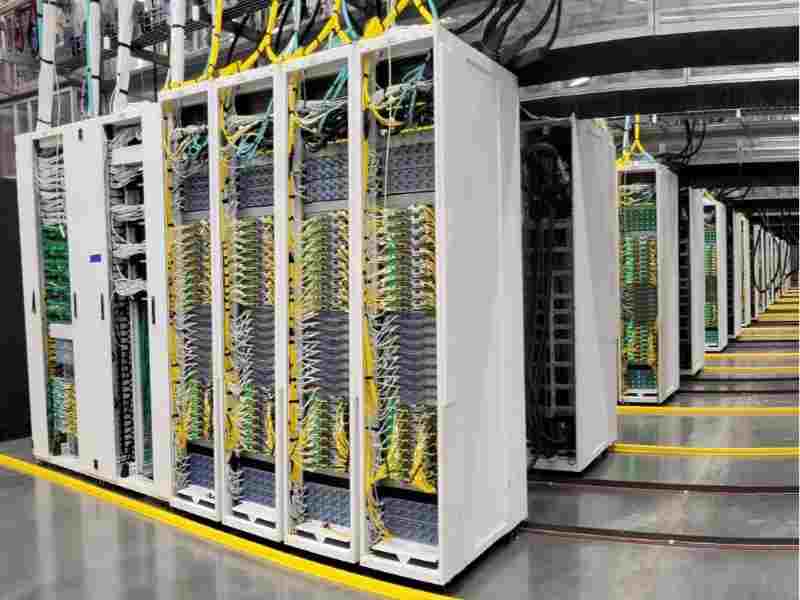
Microsoft’s concerns center on the availability of optical transceivers, which enable data to travel rapidly through fiber-optic networks inside large computing facilities.
These components are essential for connecting servers, switches, routers and other equipment that support modern AI workloads.
As artificial intelligence systems become increasingly powerful, data centers require enormous quantities of high-speed networking hardware.
Some facilities may need millions of optical transceivers to connect their computing equipment.
According to Reuters, Microsoft was among several companies that met with officials from the White House Office of Science and Technology Policy and the National Security Council in September.
The discussions focused on the supply-chain problems that could emerge if imports of Chinese optical transceivers were restricted.
Companies warned that American manufacturers might be unable to replace Chinese suppliers quickly enough to meet the rapid growth in demand.
Microsoft declined to comment publicly on the reported discussions.
What Are Optical Transceivers and Why Do AI Data Centers Need Them?
Optical transceivers are devices that convert electrical signals into optical signals and back again.
They allow information to travel over fiber-optic cables at extremely high speeds.
Inside large data centers, thousands of servers must communicate continuously while processing information, transferring files and running artificial intelligence applications.
AI systems often depend on networks of powerful chips operating together rather than a single computer.
Optical transceivers help connect that equipment and move information between different parts of the computing infrastructure.
Without adequate networking capacity, expensive AI processors may not be able to operate at their intended scale.
That makes the devices a critical part of data-center development, despite receiving far less public attention than advanced chips produced by companies such as Nvidia.
Tech Industry Warns AI Data Center Construction Could Slow
The Information Technology Industry Council, which represents major technology companies, has publicly opposed the proposed restrictions.
John Miller, the organization’s executive vice president of policy and general counsel, warned that a sudden reduction in available optical transceivers could significantly disrupt data-center construction.
The industry argues that many companies have already committed substantial amounts of capital to AI chips and other computing equipment.
If networking components become difficult to obtain, expensive processors could remain unused while operators wait for the infrastructure needed to connect them.
The council sent a letter to the Federal Communications Commission on August 13, urging the agency not to add optical transceivers to its list of restricted equipment.
The organization warned that supply disruptions could delay American AI infrastructure development and weaken the country’s technological competitiveness.
China Controls About Two-Thirds of the Optical Transceiver Market
China holds a dominant position in the global market for optical transceivers.
According to market research firm Counterpoint Research, Chinese companies account for approximately two-thirds of global supply.
Major manufacturers include Eoptolink and Zhongji Innolight.
These companies supply networking components used by large technology businesses and cloud computing operators.
Zhongji Innolight has also been placed on a Pentagon list of companies identified as having connections to China’s military.
American companies, including Coherent and Lumentum, produce competing optical networking technology.
However, a report from the Foundation for American Innovation indicates that US manufacturers currently lack sufficient production scale to replace Chinese suppliers across the entire market.
The supply imbalance is a central reason technology companies are pushing for a slower or more limited approach to import restrictions.
Trump Administration Raises National Security Concerns
The proposed ban reflects broader concerns in Washington about Chinese technology used in sensitive American infrastructure.
US officials have expressed concern that certain networking devices could potentially create opportunities for unauthorized data access, malicious software installation or service disruption.
The Federal Communications Commission is reportedly working on the proposed restrictions.
However, officials have not publicly finalized the scope of the potential ban.
The dispute highlights competing priorities within US technology policy.
National security officials and some lawmakers want stronger safeguards around critical infrastructure, while technology companies are concerned about maintaining access to equipment needed for rapid expansion.
The concerns remain allegations about potential security risks rather than publicly established evidence that all Chinese optical transceivers are compromised.
US Lawmakers Support Restrictions on Chinese Networking Equipment
Some members of Congress have urged the government to move ahead with tighter restrictions.
The House Select Committee on the Chinese Communist Party, led by Republican Representative John Moolenaar, has argued that Chinese companies associated with the military should not supply critical components for American data centers.
The committee publicly supported stronger controls following reports about the proposed ban.
In September, a bipartisan group of lawmakers also introduced legislation aimed at preventing sensitive federal government systems from using Chinese-made optical transceivers.
The proposed legislation focuses on government infrastructure and is separate from the broader potential restrictions being considered by the FCC.
The distinction is important because restrictions on sensitive federal systems would affect a narrower range of equipment than a general import ban.
Could the US Ban Only Next-Generation Chinese Optical Transceivers?
The administration is reportedly considering a more targeted approach.
According to an October Morgan Stanley research note, policymakers have examined the possibility of restricting Chinese optical transceivers capable of transmitting data at 3.2 terabits per second.
These next-generation devices are not expected to enter large-scale production until around 2028, with widespread deployment anticipated in 2029.
Restricting future generations of equipment could give American manufacturers additional time to expand capacity.
It might also reduce the immediate disruption to data-center projects that depend on existing Chinese-made components.
However, the FCC has not publicly confirmed that this technical threshold will be adopted.
The eventual scope and timing of any restrictions remain uncertain.
China Criticizes Proposed US Technology Restrictions
Chinese officials have opposed the proposed limits, arguing that Washington is using national security concerns to restrict Chinese companies unfairly.
The Chinese embassy in Washington criticized what it described as an overly broad application of national security justifications.
Beijing has maintained that Chinese technology businesses should receive fair treatment in international markets.
The disagreement comes amid a broader struggle between the United States and China over semiconductors, artificial intelligence, advanced manufacturing and strategically important technology supply chains.
Both countries are investing heavily in AI capabilities while seeking greater control over the equipment and infrastructure needed to support them.
Microsoft Expands AI Spending Despite Rising Costs
The dispute arrives as Microsoft continues investing heavily in AI infrastructure.
The company’s Azure cloud platform provides computing services to businesses, software developers and organizations using advanced artificial intelligence applications.
Microsoft is also expanding its own Copilot products and supporting other AI services through its cloud infrastructure.
Large data centers require substantial spending on chips, networking equipment, electricity, cooling systems and construction.
Any disruption in the supply of critical components could increase project costs or delay the deployment of new computing capacity.
Microsoft has also been examining ways to control operating expenses while maintaining its AI investment program.
As previously reported by Business Innovative News, Microsoft offered voluntary buyouts to approximately 60,000 eligible employees as AI spending increased.
The company’s efforts to manage workforce costs while expanding infrastructure illustrate the financial pressures facing major technology businesses.
AI Spending Concerns Add Pressure to Technology Stocks
The proposed restrictions could create another source of uncertainty for an industry already facing questions about the financial returns from AI investment.
Investors have become increasingly focused on how quickly large technology companies can convert spending on data centers and computing equipment into sustainable revenue and profits.
Delays in construction could increase costs and push back the expected returns from expensive infrastructure projects.
The supply-chain dispute therefore has potential implications for cloud computing providers, semiconductor manufacturers, networking equipment suppliers and construction companies.
The latest disagreement over Chinese optical transceivers adds international trade policy and hardware availability to the list of risks facing the AI industry.
What Happens Next With the Chinese Data Center Technology Ban?
The Federal Communications Commission has not announced a final rule banning Chinese optical transceivers from US data centers.
Several possibilities remain under consideration, including broader restrictions, limits on advanced future products or a decision not to proceed.
Technology companies are expected to continue making their case that national security protections should be balanced against the practical requirements of expanding American computing infrastructure.
Lawmakers supporting restrictions are likely to continue emphasizing the security of sensitive networks and the importance of reducing dependence on Chinese suppliers.
The final decision could influence the timing of US AI data-center construction, the growth of domestic optical networking manufacturers and the broader technology relationship between Washington and Beijing.