Google is making a new attempt to reshape the laptop market with Googlebook, a premium PC category built around a simple proposition: if you already use an Android phone, your laptop should work more naturally with it.
The company opened pre-orders for the first Googlebook models on September 21, with devices starting at $899 from Acer, ASUS, Dell, HP and Lenovo. The new machines combine an Android technology foundation with desktop technologies developed for ChromeOS, while putting Google’s Gemini artificial intelligence tools at the center of the experience.
The strategy gives Google a more direct answer to one of Apple’s biggest ecosystem advantages — the close relationship between the iPhone and Mac.
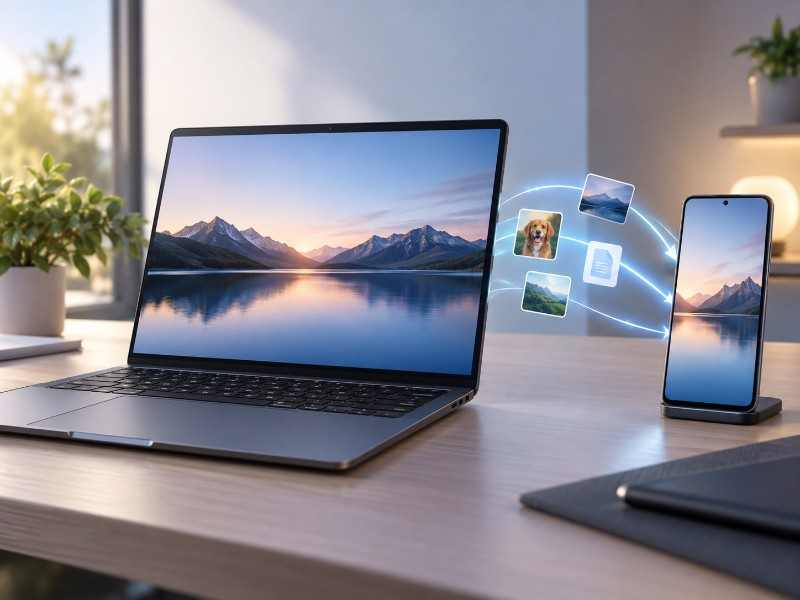
Rather than treating a smartphone and laptop as separate devices connected through a handful of syncing tools, Google wants Android phones and Googlebooks to behave more like parts of the same computing environment.
Android is at the center of Googlebook
Google says Googlebook is built on the Android technology stack, combined with desktop foundations developed through ChromeOS.
That distinction is important. Chromebooks have supported Android applications and Android-phone integration for years, but Googlebook makes Android a more fundamental part of the platform.
For users, however, Google appears to be trying to keep the transition familiar. The new system retains many concepts associated with ChromeOS while expanding its support for Android applications, desktop workflows and Google’s AI services.
The result is intended to give Android users a laptop that feels like an extension of their phone rather than another device that needs to be configured separately.
Continue On moves work from phone to laptop
One of Google’s main cross-device features is Continue On.
The feature is designed to let a user begin an activity on an Android phone and resume it from the Googlebook taskbar. Google gives the example of starting a project in an app on a phone while traveling and continuing the same task after opening the laptop.
This approach closely follows the broader trend toward continuity across personal devices, where the operating system keeps track of what a user is doing rather than requiring applications and files to be reopened manually.
Google is betting that native integration with Android could make that process particularly useful because Android remains the operating system used by a large range of smartphone manufacturers.
Phone files become accessible from the laptop
Googlebook also expands the connection between a laptop’s file system and the user’s phone.
Google says its Files application can let users view, search and open files and photos stored on their connected Android phone.
That could remove several common steps people currently use to move information between devices, such as uploading a photo to cloud storage, emailing a document to themselves or manually transferring files.
Google says phone settings, saved passwords, Wi-Fi networks and messages can also move into the Googlebook experience when a user signs in, with the company saying the information is protected using end-to-end encryption.
Cast My Apps brings phone apps to the desktop
Another major feature, Cast My Apps, allows users to stream and interact with applications running on their Android phones from a window on the Googlebook.
Google suggests the feature could be used to access a mobile-only service, check Messages for a one-time authentication code or interact with another phone application without repeatedly switching devices.
Chromebooks already offered several Android connectivity features through Phone Hub, including notifications, messages, photos, hotspots and some app-streaming capabilities. Googlebook is designed to take that relationship further by building cross-device functionality deeper into the new platform.
Some of Google’s newest phone-continuity features require a compatible phone running Android 17 or later, according to the company’s compatibility information.
Gemini becomes part of the laptop interface
Android connectivity is only part of Google’s pitch.
Googlebook is also being positioned as a laptop designed around Gemini Intelligence, with AI features integrated directly into desktop interactions.
One feature called Magic Pointer allows Gemini to understand text, images and other information around the user’s cursor. Google says users can trigger the feature by moving the pointer or using a keyboard shortcut, bringing contextual AI assistance directly into the area where they are working.
Reuters reported that Googlebook’s Gemini features can help users draft and organize text, ask questions about information displayed on the screen and resume tasks started on an Android device.
The company is effectively betting that AI assistants will become part of the basic laptop interface rather than remaining isolated inside chat applications or browser tabs.
Googlebooks start at $899
Google is deliberately positioning Googlebook above the budget segment traditionally associated with Chromebooks.
The first models start at $899 and use processors from Intel and Qualcomm. Google says configurations can include dedicated neural processing units capable of more than 45 TOPS of AI performance and offer up to 14 hours of battery life.
Displays can reach up to 2.8K OLED resolution, while manufacturers are using materials including aluminum, magnesium alloy and carbon fiber.
Google has announced five initial flagship models, with Acer offering a convertible design, ASUS focusing on a lightweight model and Lenovo offering a larger 15-inch option. Dell and HP are also part of the launch lineup.
The move takes Google into a higher-priced segment where it will compete not only with Windows PCs but also more directly with Apple’s MacBook lineup.
Google is targeting the Android ecosystem
Googlebook represents a change from Google’s historical laptop strategy.
Chromebooks became popular largely through inexpensive hardware, web-based computing and education deployments. Googlebook is instead being presented as a premium consumer platform combining Android, ChromeOS technologies and Gemini.
Reuters described the launch as Google’s latest attempt to establish a flagship laptop experience following earlier Google-designed machines including the Pixelbook in 2017 and Pixelbook Go in 2019.
Google is not relying on a single first-party laptop this time. Acer, ASUS, Dell, HP and Lenovo are supplying the initial hardware, giving the new platform access to some of the world’s largest PC manufacturers from launch.
For Google, the bigger opportunity may be the relationship with Android.
Millions of consumers already use Android phones alongside Windows laptops, Chromebooks and other computers. Googlebook’s pitch is that those users should no longer have to accept a loose connection between the two devices.
The company now has to persuade them that closer Android integration, Gemini-powered desktop tools and premium hardware are enough reasons to choose a Googlebook when buying their next laptop.