Inflation accelerated in the United States in September, as sharply higher gasoline prices pushed up household costs and renewed questions about whether the Federal Reserve will need to raise interest rates again to contain persistent price pressures.
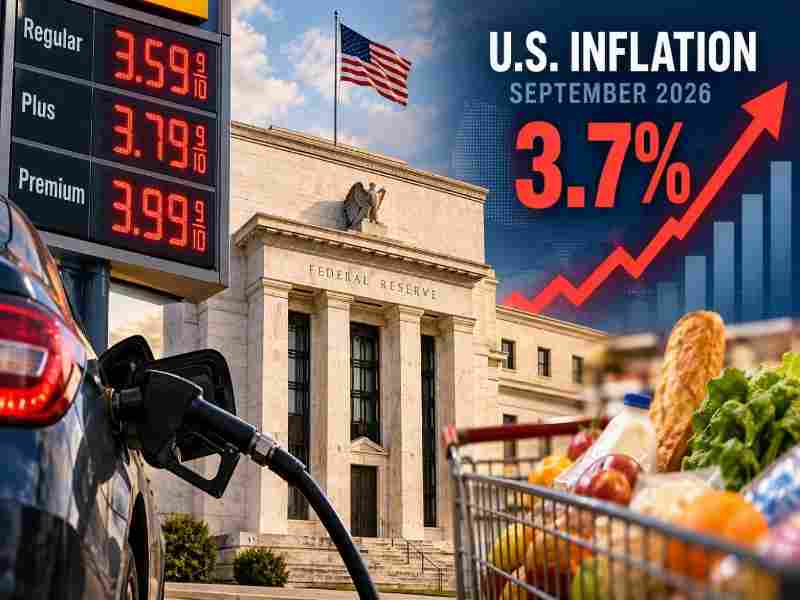
The Consumer Price Index rose 0.6 percent from August and 3.7 percent from a year earlier, according to data released by the Bureau of Labor Statistics. Annual inflation had been 3.4 percent in August.
The increase was stronger than many economists had expected and represented an unwelcome turn for policymakers who had been hoping that inflation was settling into a more manageable pattern.
The September report was heavily influenced by energy prices. Gasoline costs jumped 9.1 percent over the month, accounting for more than half of the increase in the overall index. The broader energy index rose 5.2 percent.
But the report contained signs that price pressures were not confined to fuel.
So-called core inflation, which excludes the often volatile food and energy categories, rose 0.3 percent in September and 2.6 percent from a year earlier, up from a 2.4 percent annual rate in August.
That increase is likely to command particular attention at the Federal Reserve, where officials are trying to determine whether inflation is continuing to cool or becoming entrenched again.
A Complicated Picture for the Federal Reserve
The Fed does not formally target the Consumer Price Index, relying instead on a separate measure known as the Personal Consumption Expenditures price index. But CPI remains one of the most closely watched gauges of inflation and can provide an early indication of the direction of consumer prices.
September’s data arrive at an awkward moment for the central bank.
After raising its benchmark interest rate in September, Fed officials have been weighing signs of softer employment growth against continued inflation risks. The latest report strengthens the argument for keeping borrowing costs elevated — and potentially raising them again if price pressures continue.
Higher interest rates can restrain inflation by slowing spending and investment. But they also increase the cost of mortgages, auto loans, credit-card debt and business financing.
The central bank must therefore decide whether another rate increase is necessary to prevent inflation from accelerating further, or whether additional tightening would place unnecessary pressure on an economy that has already begun to show signs of strain.
Financial markets quickly moved to reconsider the likely path of monetary policy after the inflation figures were released.
Gasoline Prices Drove the Headline Increase
For American households, the most visible source of September’s inflation was at the gas pump.
Gasoline prices rose 9.1 percent during the month, while the broader energy category increased 5.2 percent.
Higher fuel prices can have effects beyond household transportation budgets. Businesses that depend on trucking, shipping and air travel can face higher operating costs, some of which may eventually be passed on to consumers.
That possibility is one reason economists will be watching the coming months closely. A temporary surge in gasoline prices would have a different economic impact from a sustained increase that begins feeding into the cost of goods and services.
Business Innovative News has previously examined the connection between rising bond yields, energy costs and pressure on U.S. equities in its coverage of the surge in the 10-year Treasury yield.
Underlying Inflation Also Firmed
The more troubling part of the report for policymakers may be what happened after energy and food were stripped out.
Core prices increased 0.3 percent in September. Shelter costs rose 0.4 percent, continuing to place pressure on household budgets even as housing inflation has eased from earlier peaks.
Used cars and trucks also became more expensive during the month, while prices rose in several service categories.
Those increases suggest that the September inflation spike cannot be explained entirely by gasoline.
The question now is whether the rise represents a temporary interruption in the disinflationary trend or the beginning of a more persistent rebound in prices.
Grocery Prices Were More Stable
There was some better news for consumers.
Overall food prices were little changed in September, and grocery prices declined slightly. Prices for several categories, including beef, dairy products and eggs, fell during the month.
But the relief was uneven.
Some beverages, fruits and vegetables became more expensive, and grocery prices remained higher than they were a year earlier.
For many households, that means the inflation experience remains mixed: some everyday expenses are stabilizing even as gasoline, housing and services continue to absorb a larger share of household budgets.
Markets Reacted Quickly
The hotter-than-expected inflation report reverberated through financial markets.
Stocks fell as investors reconsidered the possibility that interest rates could remain high for longer. Treasury yields climbed, reflecting expectations that the Fed may need to maintain a restrictive policy stance.
Technology shares were particularly vulnerable.
Companies whose valuations depend heavily on expectations of future earnings tend to be more sensitive to higher interest rates. When Treasury yields rise, safer government bonds can also become more attractive relative to stocks.
That dynamic has been especially important for technology and artificial-intelligence companies, many of which have benefited from extraordinary investor optimism and large capital-spending plans.
Business Innovative News has also examined how the AI investment boom is reshaping U.S. economic growth, inflation and interest-rate expectations.
Inflation Remains Above the Fed’s Goal
Despite substantial progress from the inflation shock that followed the pandemic, price growth remains above the Federal Reserve’s longer-term goal.
That gap matters because inflation becomes more difficult to control when businesses and consumers begin to expect prices to keep rising rapidly.
Fed officials have repeatedly emphasized that they need convincing evidence that inflation is returning sustainably toward 2 percent.
September’s numbers make that case harder to establish.
A single monthly report is unlikely to determine monetary policy on its own. Officials will also receive additional employment, producer-price and consumer-spending data before making future rate decisions.
But the report has reduced confidence that the battle against inflation is moving smoothly toward a conclusion.
Social Security Benefits Will Also Be Affected
September’s inflation data have consequences beyond monetary policy.
Inflation readings from the third quarter are used to determine the annual cost-of-living adjustment for Social Security benefits.
The Social Security Administration has announced a 3.6 percent cost-of-living adjustment for 2027, affecting millions of retirees and other beneficiaries.
The adjustment uses the Consumer Price Index for Urban Wage Earners and Clerical Workers, or CPI-W, rather than the headline CPI measure most often cited in inflation reports.
Business Innovative News has more coverage of the 2027 Social Security COLA and its impact on monthly benefits.
What Comes Next
Economists will now look for evidence about whether September’s rise in inflation was primarily the result of a temporary energy shock or a sign of broader price pressures.
If gasoline prices retreat and underlying inflation resumes its decline, the Federal Reserve may have more room to leave interest rates unchanged.
If core inflation continues to strengthen, however, policymakers could face pressure to tighten monetary policy again.
For consumers, the distinction matters considerably.
Another rate increase could make borrowing more expensive at a time when households are already contending with elevated housing, transportation and service costs. But allowing inflation to accelerate again would carry its own economic risks.
The September report leaves the Federal Reserve confronting a familiar dilemma: inflation has come down considerably from its highs, but not far enough — or consistently enough — for policymakers to declare victory.