Federal safety regulators are reviewing allegations that Tesla robotaxis exceeded posted speed limits in active school zones, opening another area of scrutiny for the automaker’s expanding autonomous-driving business.
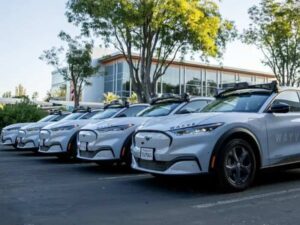
The National Highway Traffic Safety Administration’s Office of Defects Investigation, or ODI, opened Defect Petition DP26010 on October 9, 2026. The filing covers model-year 2026 Tesla Robotaxis, including Model Y vehicles and the Cybercab, when Tesla’s Automated Driving System is engaged.
The agency estimates that about 1,000 vehicles fall within the scope of the review. However, that number represents NHTSA’s estimated population covered by the petition; it should not be interpreted as confirmation that 1,000 vehicles were involved in speeding incidents.
NHTSA’s record lists four reports connected with the allegations and says the petitioner provided three links to video footage as supporting evidence. No crashes, fires, injury incidents or fatalities are listed in the federal filing.
Tesla Robotaxi School-Zone Review: Key Facts
| Detail | Information |
|---|---|
| Federal agency | National Highway Traffic Safety Administration |
| Office | Office of Defects Investigation |
| Case number | DP26010 |
| Petition received | September 23, 2026 |
| Review opened | October 9, 2026 |
| Vehicles | 2026 Tesla Robotaxi Model Y and Cybercab |
| System involved | Automated Driving System |
| Estimated population | About 1,000 vehicles |
| Reports listed | 4 |
| Supporting video links | 3 |
| Crashes or fires | 0 |
| Injury incidents | 0 |
| Fatalities | 0 |
| Current status | Defect petition under review |
The details come from NHTSA’s official ODI opening resume for DP26010.
What the Tesla Robotaxi Petition Alleges
NHTSA said it received the petition on September 23 requesting an investigation into model-year 2026 Tesla Robotaxis operating with their Automated Driving System engaged.
According to the official filing, the petitioner alleges that the vehicles “exceed posted speed limits in active school zones.” The petitioner also submitted three links to video footage intended to support the claims.
The agency’s failure-report summary lists four incidents in total. One appears in ODI’s reporting column, while three are identified as social-media reports included with the petition.
The public opening resume does not establish that Tesla has violated traffic laws or that its autonomous-driving software contains a defect. Instead, NHTSA is reviewing the allegations to determine whether a formal investigation is warranted.
That distinction is important because reports describing the proceeding simply as an “investigation” can make the action appear more advanced than it currently is.
NHTSA Has Not Yet Opened a Formal Defect Investigation
The current proceeding is a defect-petition review.
NHTSA says ODI opened the petition specifically to evaluate the allegations and determine whether to grant or deny the request for an investigation.
That means regulators have not yet concluded that the reported behavior occurred because of a vehicle defect.
The proceeding also does not mean Tesla has been ordered to recall the Model Y or Cybercab.
At this stage:
- There is no recall tied to DP26010.
- NHTSA has not identified a confirmed defect.
- No crashes or injuries are listed in the petition record.
- The agency has not yet announced a formal defect investigation.
If ODI determines that the allegations justify further examination, regulators could move to a formal investigation and seek additional information from Tesla.
Why School-Zone Speeding Matters for Autonomous Vehicles
School zones present a particularly complicated environment for automated-driving systems because applicable speed limits may change according to the time of day, flashing warning lights and local traffic conditions.
A road that normally permits vehicles to travel at a higher speed may require significantly slower driving during school arrival and dismissal periods.
An autonomous vehicle must therefore recognize more than a standard speed-limit sign. It may need to interpret temporary restrictions, flashing school-zone signals, children approaching crosswalks, school buses, pedestrians and crossing guards.
The federal review raises the question of whether Tesla’s Automated Driving System can consistently recognize when a reduced school-zone speed limit is active and adjust vehicle speed accordingly.
The broader safety implications are significant. According to NHTSA’s guidance on speeding and road safety, higher speeds increase stopping distance and can increase crash severity. NHTSA reported that 11,288 people were killed in speeding-related crashes in 2024, representing 29% of U.S. traffic fatalities that year.
Model Y and Cybercab Are Both Covered
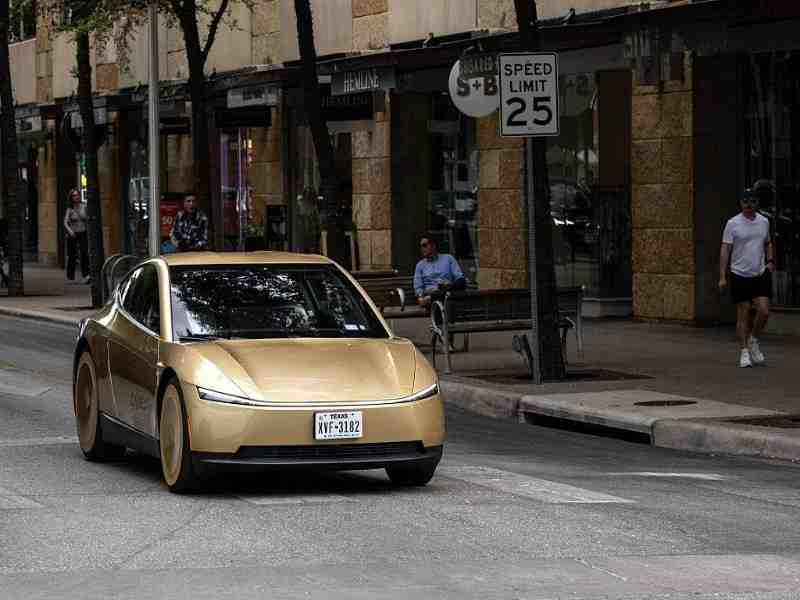
The proceeding covers two vehicles associated with Tesla’s autonomous ride-hailing ambitions: the Model Y and the purpose-built Cybercab.
Tesla has used Model Y vehicles as part of its robotaxi development, while the Cybercab represents the company’s longer-term vision of transportation built around autonomous operation.
The Cybercab is particularly significant because its design moves away from the traditional assumption that a human driver must be ready to take control.
Tesla’s increasing focus on autonomous mobility is not new. Business Innovative News previously reported on Tesla’s strategic shift toward robotaxis as competition intensified in the electric-vehicle market.
That strategy makes regulatory scrutiny of Tesla’s autonomous-driving performance increasingly important to the company’s future.
NHTSA Lists No Crashes or Injuries in the Petition
Although school-zone allegations naturally raise safety concerns, the federal record is also clear about what has not been reported in this case.
NHTSA lists:
0 crashes or fires
0 injury incidents
0 fatalities
across the four reports associated with DP26010.
Those figures are important because they show that the current proceeding concerns alleged driving behavior rather than a reported collision or injury event.
They do not, however, determine whether a safety defect exists. NHTSA can examine vehicle behavior before a crash occurs when a petition raises questions about whether a system could create an unreasonable safety risk.
Tesla Robotaxi Expansion Brings Greater Regulatory Attention
The petition arrives as Tesla places greater strategic importance on autonomous transportation.
Robotaxis are central to Tesla Chief Executive Elon Musk’s vision of vehicles capable of operating with progressively less human involvement.
As deployment expands, regulators are likely to pay close attention to how automated vehicles respond to ordinary but safety-critical driving situations—including speed limits, traffic signals, pedestrian crossings, emergency vehicles and school zones.
For Tesla, the school-zone petition is therefore significant even though it has not yet resulted in a recall or formal defect finding.
The review tests whether regulators believe the allegations provide enough evidence to justify a deeper examination of Tesla’s Automated Driving System.
Petition Review Should Not Be Confused With a Recall
The terminology surrounding federal vehicle-safety actions can be confusing.
A defect petition allows a person or organization to ask NHTSA to investigate an alleged safety defect.
ODI then reviews the information before deciding whether the petition should be granted or denied.
A formal investigation would represent a further regulatory step.
A recall, meanwhile, generally comes only if a safety-related defect or noncompliance is identified and corrective action becomes necessary.
DP26010 is currently at the earlier petition-review stage. NHTSA explicitly states that the purpose of opening the file is to evaluate the allegations and decide whether to grant or deny the petition.
What Could Happen Next?
NHTSA will review the petition, the supplied video links and other available information before determining whether further action is appropriate.
If the agency grants the petition, ODI could proceed with a more formal investigation into how Tesla’s Automated Driving System responds to active school-zone speed limits.
Such an investigation could potentially involve requests for software information, vehicle data, testing records or explanations of how Tesla’s system identifies variable speed limits.
If regulators ultimately found a safety-related defect, potential remedies could include software changes or other corrective action.
But none of those outcomes has been ordered at this point.
NHTSA could also deny the petition if regulators determine that the available information does not justify further investigation.
Tesla had not publicly detailed a response to the specific school-zone allegations when the review became public. Recent reporting likewise described the case as a petition review awaiting a decision on whether a formal investigation should begin.
Why the Review Matters Beyond Tesla
The case also illustrates a challenge facing the wider autonomous-vehicle industry.
Driverless vehicles are increasingly expected to handle situations that human drivers encounter every day but that can be difficult for automated systems to interpret consistently.
School zones are one example because the applicable speed limit may depend on temporary signs, flashing lights, schedules and the presence of children.
As robotaxi services expand, regulators will increasingly evaluate not only whether autonomous vehicles avoid crashes, but also whether they consistently follow traffic rules designed to prevent dangerous situations before they develop.
For Tesla, the immediate question is narrower: whether NHTSA will grant DP26010 and open a formal investigation into the alleged school-zone speeding behavior.
The agency’s public record currently shows the petition as open and identifies no crashes, injuries or fatalities associated with the four reports under review.